
-
New framework contract between the Tandem Laboratory and the University of Oslo
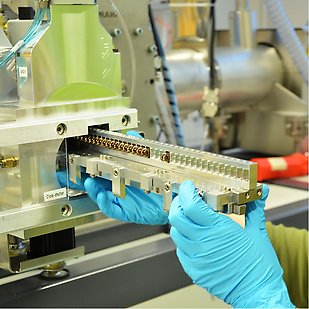
2025-01-28 The Tandem Laboratory has signed a framework contract with the University of Oslo as supplier for radiocarbon dating services. The contract runs from January 2025 for two years and can be extended to three or four years. Radiocarbon dating is a technique that allows for determining the age of a sample by measuring the…
-
The Kempe foundation supports method development of a new hyperspectral camera
The ArchLab laboratory for Environmental Archaeology in Umeå (MAL) in collaboration with the Department of Chemistry (Umeå), received funding from the Kempe Foundation for two postdoctoral research assistants to work on methods development connected to the new (Kempe funded) hyperspectral camera.
-
The Humanities and Social Sciences Research Project receives 6.3 million SEK from Vetenskapsrådet
Vetenskapsrådet funds the Humanities and Social Sciences Research Project with 6.3 million SEK for 2025-2029. The project combines ArchLab-based methods (such as isotopes and residues) and digital methods to understand societal resilience against prehistoric catastrophes
-
ArchLab LLL unit receives 2.15 MSEK from Lund University
2024-11-06 ArchLab LLL, as part of the Lund University infrastructure Lu2D2 (Lunds Luminiscenscentrum för Datering och Dosimetri – Lunds universitet) received 2.15 MSEK from Lund University and the Faculty of Science for equipment that will expand the capabilities of the laboratory, including dating cobbles and get more precise background radiation measurements.
The multiproxy
Archaeological data tend to complement each other and can add more layers of knowledge for the interpretation of the past. The results from one method also add insights where preservation conditions for one type of data is lacking. For example, insects provide information about environments beyond that which pollen from wind-pollinated plants can provide. Vice versa plant macrofossils provide information about the use of plants where the presence of pollen is limited. By the addition of multiple layers of archaeological information, the modelled past offers a wider view of the past and paints a picture with more detail.
If you want to use multiproxy analysis for your project or need support you can contact us. Our experts can discuss and advise on the most appropriate sampling strategies and analysis combinations for all projects. Contact us here.
